


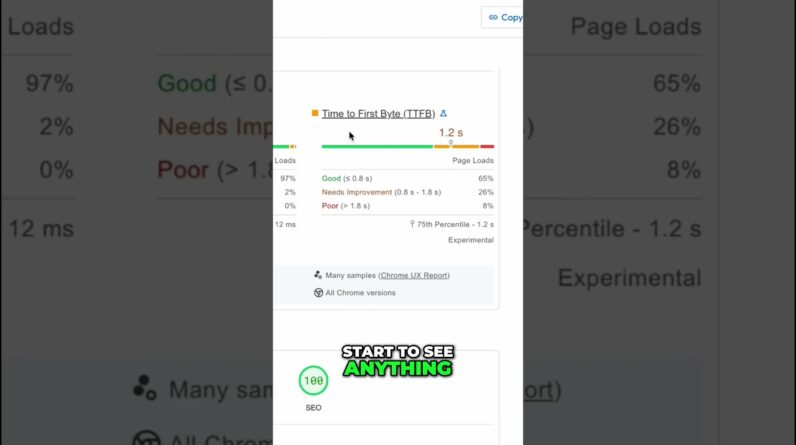
When it comes to understanding the concept of Time To First Byte (TTFB), one must delve into its significance for website performance. It plays a crucial role in determining how quickly a web server responds to a request for loading a webpage. For online businesses and website owners, comprehending TTFB is indispensable for enhancing user experience and search engine rankings. Let’s explore the nuances of TTFB and its impact in optimizing website speed.
What is Time To First Byte?
Introduction
In the fast-paced digital world, where website performance plays a crucial role in user experience and SEO rankings, understanding metrics like Time To First Byte (TTFB) is essential. TTFB refers to the time taken for the browser to receive the first byte of data from a web server. A slow TTFB can negatively impact user experience, leading to higher bounce rates and lower search engine rankings. Therefore, optimizing TTFB is vital for improving website speed, performance, and SEO results.
Why is TTFB Important for Website Performance and SEO?
- TTFB is a critical metric for website performance as it directly affects the time it takes for a webpage to load.
- A slow TTFB can result in delayed loading times, frustrating users, and potentially leading them to abandon the website.
- Search engines like Google consider website speed as a ranking factor, making TTFB optimization crucial for SEO success.
How Does TTFB Impact User Experience and SEO Rankings?
- Slow TTFB can lead to longer loading times, which can impact user experience negatively.
- Users expect websites to load quickly, and a delayed TTFB can result in a poor user experience, affecting bounce rates and conversions.
- Search engines value user experience, and websites with slow TTFB may experience lower rankings in search results.
Strategies for Improving TTFB and Website Performance
- Implementing caching mechanisms to reduce server response times and improve TTFB.
- Optimizing images and other media files to reduce their size and enhance page loading speed.
- Upgrading web hosting services to a more robust and reliable provider for faster server responses.
- Minimizing unnecessary redirects and reducing the number of HTTP requests to enhance TTFB and overall website performance.
TTFB Optimization for Better PageSpeed Insights and Core Web Vitals
- TTFB optimization is a key component of improving PageSpeed Insights scores, which measure website performance.
- Meeting Core Web Vitals requirements, including TTFB optimization, is essential for ranking well in search engine results.
- Monitoring TTFB regularly and making adjustments to improve it can lead to better overall website performance and user satisfaction.
Conclusion
In conclusion, Time To First Byte (TTFB) is a critical metric for website performance and SEO. By understanding TTFB and implementing strategies to optimize it, website owners can improve user experience, enhance SEO rankings, and meet Core Web Vitals requirements. Prioritizing TTFB optimization is essential for achieving faster loading times, higher search engine rankings, and better overall website performance.
FAQs (Frequently Asked Questions)
- What factors can lead to a slow Time To First Byte (TTFB)?
- How can website owners measure their TTFB to identify performance issues?
- Does TTFB optimization require technical expertise, or are there user-friendly tools available?
- Are there any industry benchmarks or standards for acceptable TTFB times?
- How frequently should website owners monitor and optimize their TTFB for optimal performance?